Google+
Showing posts with label backyard chickens. Show all posts

Friday, September 18, 2015

Backyard Chicken Hearing for Minto Ontario

Connie is hoping to save her 3 chickens from the municipal bureaucratic steamroller.  The public input meet was held on Tuesday Sept. 15th 2015 in Clifford ON, and now we wait for Council's decision.

We previously described Connie's struggle to have a fresh, healthy supply of chicken eggs for her family, and SFPFC's attempt to help her efforts (see Backyard Eggs for Minto and Backyard Chickens for Canadian Municipalities ).

Connie reported that more than 40 people attended the public meeting.  People attended from as far away as Kincardine, Owen Sound, and Brantford.  Most people were there to observe the proceedings, and didn't reveal their leanings, neither pro nor con.

One lady did speak against the proposal for legal backyard chicken for Minto.  This contrarian lady lives in another community within the Minto municipality limits, but is not anywhere near Connie.  This lady explained that she objects to backyard chickens as she doesn't want to be sitting in her backyard and be overwhelmed by chickens in a neighbour's yard.  She fears she will be bombarded by chicken manure flying over the shared fence, landing into her yard, offensive odors, screaming rooster calls, the continuous cackle from a multitude of chickens, or the health risk and nuisance from chicken predators.

If those fears were realistic, I don't know many people who would welcome chickens in neighbour's yards; all problems, with no benefits.  However, what needs to be decided is whether these fears are realistic.  Assuming a 5 ft. high fence separates the neighbours, it is hard to imagine how chicken manure would come flying over the fence into a neighbour's yard.

Is she assuming that her neighbour will be using a chicken manure catapult to get rid of this valuable fertilizer?  Is this of any greater risk or hazard of a neighbour tossing all the rotting windfall fruit that fell from a neighbour's fruit tree? Why does one risk need a By-law but the other does not?

What about the noise from a flock of chickens?  Surely there is a different between a neighbour's fruit tree vs. a flock of chickens?

I have 100 layers in a coop located a dozen or so yards from my house. Assuming that the chickens aren't screaming for their life as they are chased by a fox or other predator, I find it difficult to imagine how the usual flock noise from would be offensive to a neighbour who would likely be 50 ft. away, or more.

Urban, at night sound levels are typically 12 to 52 dB.  Chickens are typically locked up inside their coop at night so as to protect them from from predators.  Add to this the chickens are typically sleeping at night.  These important factors would tend to significantly reduce any noise produced during the nightly quiet time.

Table 1:  Chicken Noise
Vs. Flock Size
If we assume that 1 chicken produced 30 dB of noise, what will the total noise level be for a flock of varying sizes?

Noise does not have a linear additive effect.  Sound power levels are logarithmic.

Engineering Toolbox provides a handy calculator for adding the noise from similar sound sources, from which we get Table 1 on the right.

Connie currently has 3 chickens.  The By-law may be considering a maximum of  5 backyard chickens.  According to this analysis, 5 chickens would be just 23% louder (37 dB vs. 30 dB) than a single chicken.

Even at a flock size of 100 birds, we would have a noise level of 50 dB, which is 67% louder than just 1 chicken.  A flock of chickens of 100 birds, the maximum non-quota flock permitted in Ontario, would be just 50 dB, which would be in the typical range of urban nighttime noise levels (12 to 52 dB).

Therefore any reasonable size flock should not overwhelm other urban noises that might disturb neighbours.

Hopefully Minto Council can see the difference from unreal fears and reality.

A second issue raised was the risk of Bird Flu (ie. HPAI:   Highly Pathogenic Avian Influenza), supported by the local Public Health Unit.  It is unfortunate that the Health Unit raised the question, but failed to provide an answer to their question for Minto Council.

I have previously examined the risk of Bird Flu (see Blog Postings:
CAFO chicken factories tend to be associated with 85% of all outbreaks of Bird Flu, while small flocks have about 15% of all Bird Flu outbreaks.  This ratio is true in spite of small flocks being the vast majority of all flocks.  Based on a rough risk analysis I performed, CAFO chicken factories are 77 times riskier than a backyard flock for Bird Flu.  That risk cloud continues for 20 miles or more downwind of a CAFO chicken factory as the huge exhaust fans spew chicken dust, feathers, manure, and infectious bacteria & viruses downwind to unsuspecting victims.

If the Public Health Unit isn't banning CAFO chicken factories for this reason, then they shouldn't be raising Bird Flu as an objection for 3 backyard chickens.  That is clearly scare mongering and a red herring by the Public Health Unit.

Now, Connie has to wait a week to get Minto Council's answer on her flock of 3 chickens.


Tuesday, September 15, 2015

Backyard Chickens for Canada's Municipalities

Connie Murray's 3 backyard chickens are threatened by the powerful Municipality of Minto (see Blog "Backyard Eggs for Minto").

This scene has repeated itself all across Canada.  Fortunately, some enlightened Municipalities have allowed backyard chickens to exist again, as they have for the last 350 years in Canada.

Gord Hume, former Mayor of London ON said in his book 10 Trends For Smarter Communities

"Municipalities have this tsunami of change coming at them, yet we have Councillors fretting about chickens in backyards."

Today, we present a draft Municipal By-law that Connie and all others can use to help their Municipality to also see the light.

SFPFC's Draft Municipal By-law for Backyard Chickens (MS Word Version)

SFPFC's Draft Municipal By-law for Backyard Chickens (Adobe Acrobat pdf Version)

I have also sent a link for this Blog posting to Municipal World, a magazine and reference source for all Canadian municipalities, including providing most municipalities with draft By-laws.

Hopefully Municipal World will help you and your Municipality to better understand the terrible squeeze that Canadians suffer for safe, nutritious, sustainable, self-enabling, & affordable food.

Friday, May 29, 2015

Secret Backyard Chickens Found in Midland Ontario

A secret cache of backyard chickens was discovered in Midland Ontario, under the care and control of a Midland Municipal Councillor, Pat File.
Ms Pat File, Midland Councillor, was alleged to have been
harbouring fugitive chickens in her backyard, contrary to
Midland Municipal Bylaw 98-42.  When confronted with
this allegation, the Midland Mirror reported that Pat File
confessed to being involved.

The Midland Mirror originally published the story on May 15, 2015 2:35 PM EDT at http://www.simcoe.com/news-story/5630560-midland-councillor-runs-afoul-of-chicken-bylaw/ Fortunately, Google cached the story 28 minutes after it was posted, because the Midland Mirror deleted the story shortly thereafter. 

After significant work, SFPFC's Investigative Cub Reporter was able to find and retrieve the article, and makes the full version available here, and a cleaned up version (easier to read) here.

Why is this story important enough to dredge it up from the swamp of dead stories?

Backyard chickens is a growing trend throughout Canada.

In this case, a Municipal Councillor is associated (even though when caught, she disavows responsibility and blames her spouse) with those backyard chickens.

We therefore learn that the chickens are wanted, but being in violation of a Municipal By-law is not a comfortable place to be for a Councillor.

Of course, that Councillor blames the By-law as being unreasonable, not their behaviour contrary to the By-law.  The Midland By-law 98-42 was passed by Council in 1998, 17 years ago.  I assume there was no By-law before that, so backyard chicken was likely OK in Midland before that.

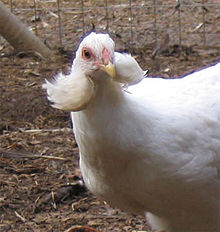
Araucana breed of chicken from
South America before the arrival
of Christopher Columbus
Perhaps Midland's First Nations people had traded for Araucana chicken from South America pre-Columbus in 1492.  More certain, white settler and their chickens have been in the Midland area since 1639 (Sainte Marie Among The Hurons).  So we conclude that backyard chickens were OK for at least 359 years, then made illegal for 17 years and counting.

Will Councillor Pat File ensure this loss of freedom for backyard chickens will soon come to an end?

Hopefully, with time, all Municipalities will re-assess their overly restrictive rules on backyard chickens.

People have the right to feed themselves, and backyard chicken helps ensure affordable food security.

SFPFC supports locally produced food, including backyard chickens in every municipality in Canada.  Do you?


Friday, September 27, 2013

Local Egg Production via Incredible Edibles

Health Canada wants to shut down the small flock and backyard egg producers throughout Canada who provide eggs for their local community.

I disagree with both the need, and the methods that Health Canada has used in this misguided witch hunt against small flockers.

Is there an alternative to Health Canada's tyrannical plan?

Todmorden, a small market town in northern England
which has transformed itself with local food production.
Let's take a look at some citizens in Todmorden England.  Pam Warhurst spoke at TEDSalon in London UK, May 2012 about their town's initiative for local, sustainable food production, linking local food to the local education system, and local businesses.  Incredible Edibles was born.

In 5 short years, Todmorden is now considered to be the first town in England that has achieved food self-sufficiency.

One of the programs that they launched was "Every Egg Counts", trying to encourage local citizens to raise chickens to provide eggs for themselves, as well as a few of their neighbours.

Campaign brochure for "Every Egg Matters", saying
"Truly Fresh, Truly Local, Truly Free Range"

Every Egg Counts was eventually able to convince local farmers that the townspeople were serious, and were truly interested in partnering with the farmers and rural citizens.

Incredible Edible Todmorden produced a map to show locals and visitors where they could go to get farm fresh eggs.

Map of Todmorden showing where local, farm fresh eggs
can be purchased.
When Todmorden first produced their map, there were only 4 egg producers in the area.  Within 3 years, they had 64 local egg producers on their map.  People are now going into the local shops seeking to buy local eggs in preference to the mass produced egg shipped in from far, far away.

The Incredible Edible Todmorden was formed on some simple principles:
  • Invented around a kitchen table by 3 people
  • No consultant
  • No study or strategy document
  • No permission asked
  • No government grant desired or needed
  • Local actions can make a difference
  • People can rally around food, "If you eat, you're in."
  • All done as an experiment
  • All done with volunteers
49% of local food producers have reported that their bottom line has improved through Incredible Edibles.

Today, there are 49 towns and cities in England who are implementing Incredible Edible, 19 sites in Canada, and hundreds of sites world-wide.  Todmorden has graciously shared their success with others so that followers don't have to re-invent the wheel.

Congratulations and thank-you to the people of Todmorden for their insight, hard work, courage, and altruism.


View Incredible Edibles and World Interest in a larger map  

Do you think that Health Canada should re-consider their unholy alliance with the Egg Mafia?

Unfortunately, it doesn't matter what you think.  You're not in charge.

The Egg Mafia is in charge, and Health Canada is dancing to their tune.