Google+

Sunday, May 31, 2015

Last Post (or close thereto)

This will be one of our last postings to this Blog, or close thereto.


This video commemorates the last post (or close thereto) for the Blog of Small Flock Poultry Farmers of Canada ("SFPFC").

The yellow dots show the location of readers who came
to this Blog seeking truth, more than 147,000 visits from
more than 152 countries. Fortunately, Canada and Canadians
had 84% of the total pageviews.
This is our 402nd posting since starting this Blog of Feb. 28, 2013 more than 2 years ago.

The yellow dots in the world map to the right show the location of readers who came to this Blog seeking truth, more than 147,000 visits from more than 152 countries. Fortunately, Canada and Canadians had 84% of the total pageviews.

Our thanks to all those who came at least once, and especially to our loyal "Blog Dogs".

SFPFC advocates for the rights and freedoms of small flock farmers in Canada.  SFPFC helps small flock farmers to provide safe, nutritious, affordable, and locally grown food for all Canadians.

Currently, a select few millionaire farmers have over 99% market share for Supply Management food commodities in Canada (dairy, chicken, turkey, and eggs).

Those CAFO (Concentrated Animal Feeding Operations, or "Factory Farms") farms and farmers use their government created monopoly to price gouge all Canadians, charging 50% to 300% more than what the rest of the world pays for these essential foods.

SFPFC believes that if any monopoly is created or allowed to continue, it must be operated so that it's in the best interest of all Canadians, not just the 2,700 minority, but chosen few members of Canada's Chicken Mafia who dream of moving from millionaire to billionaire.

The Chicken Mafia use their monopoly to oppress and bully Small Flock farmers, strip them of their rights, and prevent them from growing the food needed by their families, neighbours and communities.

The Chicken Mafia use their monopoly to deliver poor quality, unsafe, or inferior chicken to their trapped customers.

I believe this Blog has informed and delighted most who came here.  Some, mainly the Chicken Mafia, government bureaucrats, and their henchmen, have been frustrated and very upset by this Blog.  They have suffered through one blow after the next as this Blog de-constructed and carefully examined and analyzed their corrupt and dysfunction system of Chicken Supply Management.  If they have mis-read or mis-interpreted this posting, they may incorrectly assume that they have won, their embarrassing exposure to the light of day is coming to an end.  Nothing can be further from the truth.

In our Feb. 28, 2013 Blog posting Campaign Strategy, I explained how we needed 23 doublings so that SFPFC's plight comes to the attention of 8.4 million people in Ontario.  Will 147,000 views so far, we have had more than 17 doublings.  Significant and worthwhile, as we are are 74% towards our goal, but we still need 6 more doublings.

To speed that doubling process even more, we need to shift tactics, and put our campaign vehicle in high gear.
Charles Boycott (1832 - 1897),
a Land Agent acting as the
henchman of an Absentee
Landlord, Lord Erne

First a little history so you can better understand what's coming.

Charles Boycott and Unfair Treatment of Irish Farmers

Irish tenant farmers were on starvation wages with no hope of escape for hundreds of years. When the Irish Potato Famine struck (1845 - 1852), approximately 1 million people died in Ireland, and a million more emigrated away from Ireland and the famine, causing the island's population to fall by between 20% and 25%.  Most countries in Europe suffered from potato crop failures in those years, but the policies of the English government and many decades of prior neglect turned Ireland's crop failure into a famine; far worse than any other country.

With a 25% drop in the Irish population, there was a shortage of peasant workers; first time since the Black Death.  Absentee landlords needed their tenant farmers more than ever before.  The relative power had shifted from the landlords to the tenants, giving the tenant farmers some additional negotiating power to improve their lot in life, and reduce their oppression and chronic abuse by the system.

Captain Charles Boycott was an English soldier posted in Ireland, who subsequently retired and was hired by an Absentee Landlord, Lord Erne. From previous hard times running his own farm, Boycott had become set in his mode of thought such that he had "strengthened his innate belief in the divine right of the masters, and the tendency to behave as he saw fit, without regard to other people's point of view or feelings".
In 1880, there was another poor crop in Ireland.  Boycott offered the tenant farmers a 10% reduction in their rents to assist their hardship.  The tenant farmers countered with a request for a 25% reduction.  Boycott refused, and the tenant farmers were evicted.  In solidarity for the evicted tenant farmers, everybody in the community banded together (or were coerced to do so) to shun Boycott, refusing to trade with Boycott, refused to talk to him, local businessmen stopped trading with him, and the local postman refused to deliver mail.  Boycott was never threatened, but mob discipline was in place to ensure the boycotting was maintained.

Boycott wrote a letter to The Times newspaper in Oct. 1880, to garner outside support for his difficulties.  Soon the new word "boycotting" was added to the English language all over the world.
The newspapers, landowners, and upper classes supported Boycott in his time of need.  Manpower to work Lord Erne's lands was eventually imported, with over 1,000 policemen to guard and protect the scab labor.  The harvesting of the crops cost at least £10,000 to harvest about £500 worth of crops.
In support of Boycott, as a test case of what could happen to other landowners, England subsequently passed many new draconian laws to prevent these similar types of tenant labor actions.  Backlash from those draconian laws subsequently lead to the formation of the Labor Party in England.

Boycott was severely damaged financially by the controversy, and finally left Ireland in Dec. 1880, but the controversy followed him for the rest of his life, everywhere he went.

What Comes Next

My condolences to the Chicken Mafia, but the public examination of SM's dyfunctional systems is not yet done.  Steel yourself, as everybody in Canada begins to more fully understand what you and your Supply Management system has been doing to innocent Canadians.

You may notice people looking at you in a funny way when you fill up with gas, or other encounters with members of your community; a slight but noticeable edge to the conversation.  If your position of respect in your community becomes somewhat tarnished, you'll know why.  While you and your family may be good people, people may judge you for the company you have been keeping; the dysfunctional and abusive Supply Management System.

Of course, you can circle the wagons and focus all of your efforts and social interactions with your family and other SM farmers; further isolating you, even more than today.  If your current friends and business associates are quick to judge you for your ties to the SM Mafia; the hell with them!

You, as a member of the Chicken Mafia, profit from the ill got gains coming from Supply Management.  While you didn't do it directly, you acquiesced and permitted it to occur and continue. Most Canadians will soon come to realize why you have a very comfortable lifestyle; perhaps similar to what Boycott felt 135 years ago.

Now that SFPFC's research on Canada's Chicken Supply Management ("SM") system has been completed more or less, we move to a different phase of our campaign to obtain freedom from this SM Tyranny.

Today, we announce the launch of our publicity, communication, education, and awareness building phase of our campaign.  This is where we make full use of all the research described in this Blog.

Today, we shift our primary focus from collecting fact, to communicating those facts.

Come learn, then choose if you will support our just cause.

Saturday, May 30, 2015

Heritage Breeds, or Russian Roulette with Genetics

We have heard about conserving our genetic diversity in the wild, trying to undo the threatened extinction of thousands of species.  The same concept applies equally well to farms, livestock, and loss of heritage breeds, chickens included.

In Canada, only 7 people have self-identified as committed to sustaining 1 or more heritage breeds for fowl or poultry.

The Livestock Conservancy has created a map of their registry.  There are just 10 in Canada for all breeds of animal.  Some are with horses, pigs, sheep, goats, turkey, ducks, and chickens.

Of course, these are a few small farms with very limited resources (ie. knowledge, money, and hours in the day).  There are thousands of breeds in each of these species, far more than what a few individuals can focus on and sustain.

While there are similar individuals around the world, I suggest and fear that that dedicated effort will not be sufficient to stop or slow the commercialization of a few hybrids that are most profitable, and the extinction of all the rest.

Starting with the Chicken of Tomorrow contest in the late 1940's, we have accelerated the pace of chicken hybridization.  Before that, there was a huge amount of diversity in the genetic pool.  Commercialization has led to monopolization of the genetic stock.  Make a small tweak to any bread, and you now "own" that genetic material.

David Bollier blogged:
"This trend got its start in 1980 when the U.S. Supreme Court first allowed the patenting of lifeforms in the Chakrabarty case, which allowed the patenting of microorganisms.  That in turn opened the floodgates to the patenting of genes, plants, bioengineered crops, and much else.  Harvard University famously owns the patent of a specially bred mouse for cancer experiments, the “onco-mouse.”  There is much to be said for the fruits of biotech research, but there is also much to be lamented and condemned as far as the needless privatization of knowledge and stifling of competition and innovation."
In Dec. 2002, Canada's Supreme Court ruled against the patenting of higher life forms. The test case was Harvard University’s 17-year quest for ownership of its genetically engineered "oncomouse".  Biotech plants, microorganisms, and seeds can be patented, but not higher life forms like mice or people.

How does this apply to chickens?  A 2008 study estimated that commercial broiler chickens are already missing about 50% of the genetic diversity contained in all historic breeds of chicken.  It is estimated that 90% of the improvement in chicken productivity came from selective breeding efforts (eg. kg of chicken meat per kg of feed consumed, or kg of chicken meat per week of growth, etc.).  The proprietary commercial breeds of today have rapid growth and extra meat (especially breast meat), but this has also included infertility, obesity, cardiovasular disease, lameness, ascites (abdominal fluid retention), sedentary lifestyles preferences, skeletal abnormalities, male-female aggression, irregular ovulation, .  Pushing genetic selection far past the optimum so as to maximize Big Ag profits, we have many drawbacks.

Disappearance of the heritage breeds, either now or in the near future, means that those genetics of maximum profit becomes a 1-way street, with no possible exit.

We have inadvertently (or negligently) stumbled down these 1-way genetic breeding and hybridization streets before.  For example:
  • Bovine leukocyte adhesion deficiency (BLAD, an autosomal recessive hereditary disease) in Holstein cattle was caused by one popular breeding bull, Osborndale Ivanhoe, that had his artificial insemination ("AI") semen sold far and wide, siring over 100,000 animals.  His semen is $4,250 a shot, and enough semen was collected for about 200,000 shots, so we have one bull's AI potential worth $850 million.  Do you see the source of this 1-way genetic road to hell?  Much later, it was discovered that this one bull had a genetic defect; BLAD.  This fatal disease started in the 1950's, but the disease wasn't identified until 1992; 29 years after the death of that bull.  Too late then, as we were already at the end of that 1-way genetic road to nowhere.  Today, there is a genetic test for BLAD.  Based on current trends of identification and prevelence reduction for BLAD carriers in Canada, it will be eradicated by Year 2167 (152 years from now).  Genetic mistakes are BIG mistakes, and take a long time to eliminate.  This Year 2167 prediction is based upon a 4.9% BLAD Canadian herd prevalence in 1992, 1% BLAD prevalence in 2006, a 272,774 Canadian registered herd size in 2004, a 550,000 herd size in 2015, steady exponential growth in herd size and BLAD prevalence.

  • The 1970 corn leaf blight outbreak was due to the widespread use of the Texas male-sterile cytoplasm in corn hybridization.
  • One type (ie. cultivar) of banana has 47% of the world's total banana production, and has 99% of the world's banana export market; the Cavandish banana cultivar.  The millions of Cavandish banana trees of today come from cuttings taken from just one mutant banana tree, discovered sometime between 1500's and 1850's.  The world's Cavandish banana monoculture is now being decimated by a new fungus that threatens to wipe out every one of those cloned banana trees.  Note that Cavendish took off as the Big Banana in the 1950's when the previous dominate banana (Big Mike) suddenly died off from Panama Disease.  We never learn.
  • Commercial chickens are controlled by just four major breeding companies (three broiler breeders and one layer breeder), which together account for ≈90% of meat-type and ≈40% of egg-type chickens supplied commercially worldwide.  Fortunately the genome mapping of the chicken (broiler, layer, silkie, and red jungle chicken, the common ancestor) was completed in 2004.  A chicken genetics study have found that there is significant in-breeding, and a loss of 50% of the prior genetic diversity in chicken.  If these lines are crossed with each other, it would somewhat improve the diversity, but not by much.  This sad state of affairs places the entire chicken industry at great risk if future shocks, emerging diseases or outbreaks, different selection criteria emerge in the future, or market trends must be responded to with chicken genetics.  Only the small flocks on the world's non-commercial farms have the required diversity and genetic pool from which to draw.
Thoroughbred racehorses have refused to use AI techniques for these very reasons.  Humans have already done much horse inbreeding before AI arrived on the scene in the 1950's.  The further down those 1-way genetic roads you go, the canyon walls become higher, steeper, and with fewer and fewer handholds, making it virtually impossible to climb out.

There were always those who warned of these potential 1-way genetic street risks that cause loss of genetic diversity.  However, the profitability for those who lead the way, and the moral hazard relief for them (ie. private profits, but the risk and its financial consequences will fall on the general public, not those who gained the profits).

These significant benefits with no risk have enticed many to turn a deaf ear to those prophetic warnings, and they have blundered ahead, driven by greed and self interest, in spite of the risk.

Friday, May 29, 2015

Secret Backyard Chickens Found in Midland Ontario

A secret cache of backyard chickens was discovered in Midland Ontario, under the care and control of a Midland Municipal Councillor, Pat File.
Ms Pat File, Midland Councillor, was alleged to have been
harbouring fugitive chickens in her backyard, contrary to
Midland Municipal Bylaw 98-42.  When confronted with
this allegation, the Midland Mirror reported that Pat File
confessed to being involved.

The Midland Mirror originally published the story on May 15, 2015 2:35 PM EDT at http://www.simcoe.com/news-story/5630560-midland-councillor-runs-afoul-of-chicken-bylaw/ Fortunately, Google cached the story 28 minutes after it was posted, because the Midland Mirror deleted the story shortly thereafter. 

After significant work, SFPFC's Investigative Cub Reporter was able to find and retrieve the article, and makes the full version available here, and a cleaned up version (easier to read) here.

Why is this story important enough to dredge it up from the swamp of dead stories?

Backyard chickens is a growing trend throughout Canada.

In this case, a Municipal Councillor is associated (even though when caught, she disavows responsibility and blames her spouse) with those backyard chickens.

We therefore learn that the chickens are wanted, but being in violation of a Municipal By-law is not a comfortable place to be for a Councillor.

Of course, that Councillor blames the By-law as being unreasonable, not their behaviour contrary to the By-law.  The Midland By-law 98-42 was passed by Council in 1998, 17 years ago.  I assume there was no By-law before that, so backyard chicken was likely OK in Midland before that.

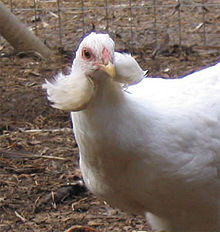
Araucana breed of chicken from
South America before the arrival
of Christopher Columbus
Perhaps Midland's First Nations people had traded for Araucana chicken from South America pre-Columbus in 1492.  More certain, white settler and their chickens have been in the Midland area since 1639 (Sainte Marie Among The Hurons).  So we conclude that backyard chickens were OK for at least 359 years, then made illegal for 17 years and counting.

Will Councillor Pat File ensure this loss of freedom for backyard chickens will soon come to an end?

Hopefully, with time, all Municipalities will re-assess their overly restrictive rules on backyard chickens.

People have the right to feed themselves, and backyard chicken helps ensure affordable food security.

SFPFC supports locally produced food, including backyard chickens in every municipality in Canada.  Do you?


Wednesday, May 27, 2015

Bitch and Complain

An anonymous person claiming to be a pig farmer, presumably from Canada, complained that the fearless leader of SFPFC complains too much about the chicken Supply Management System.  Is he right?

A complaint about our complaining.  Hypocrisy at its best?

The pig farmer's posting on Better Farming was responded to as follows by yours truly:

In response to "Expert for a Guy Who Raises 1 Chicken" http://betterfarming.com/comment/16257#comment-16257

Three years ago, all I knew about chickens was how to spell it, and eat it.  I had to learn the hard way in a very short period of time.  I still have much more to learn.  I am far from being an expert.

Currently, I have 99 layers and 1 meat bird.  I will be ordering meat bird chicks soon to pasture raise between 100 to 300 meat birds this year, depending on how many farm gate customers I can round up.

Your comment of "Raises 1 chicken" seems to be referring to our previous decision to have just 1 meat bird while our OMAFRA Appeal was active.  Is that issue still relevant for some reason?

I agree with you.  It does seem like I'm continuously  complaining about Supply Management Chicken.

Maybe I have cause to complain.

Perhaps I complain so much because I'm advocating for the rights and freedoms stolen from Small Flock Poultry Farmers all across Canada, myself included.

Perhaps it's because CFO, CFC, and most of the other players in Supply Management keep poking Small Flockers with their sharp regulatory stick.

If someone started poking you with a sharp stick, and they wouldn't stop when you asked them nicely, how many pokes would it take before you start complaining?

The sharp stick of the SM Chicken System isn't just poking Small Flockers.  They also poke every Canadian consumer when they reign over a system that charges 50% to 300% more than what other countries pay for chicken.

The SM Chicken Overlords allow and encourage steady increases in chicken prices, even more than what they are allowed under the law (eg. bogus FCR claims), so that chicken affordability dropped 37% between 1995 to 2005 for someone earning Minimum Wage in Ontario.

The SM Chicken Overlords sleep while 30% to 80% of the retail chicken sold in Ontario are contaminated with E.coli, Salmonella, Heidelberg, listeria, campylobacter, or other deadly pathogens.

The SM Overlords count their gold coins while crazy cocktails of drugs and chemicals are fed to some or most CAFO chickens so that those millionaire SM chicken profiteers maximize their profits.

Health Canada reports that 7.6% of Canadian families can't afford the food they need to feed themselves.  In Nunavut, 75% of pre-school chicken don't eat on any particular day because their is no food in the house.  Poor Canadians go "grocery shopping" by searching for food in the municipal garbage dump.  Between 1989 and 2014, Food Bank usage in Canada is up 220%.  Chicken should be the least expensive meat, and more affordable for all.  Yet the SM Chicken Overlords focus their efforts on moving their members from millionaires to billionaires.

By the death grip with which they hold and protect their precious monopoly, the SM Monopolists prevent 430,000 new jobs from being created all across Ontario, and the prosperity those jobs could bring to hundreds of small communities and remote areas.

So maybe you're right.  Maybe I do complain too much. 

If you (or anybody else who would like to do so) will kindly explain why I should stop complaining about any of the issues listed above, and provide reasonable and sufficient arguments that I can easily understand, I am willing to drop that issue from my list of complaints against Canada's SM Chicken Overlords.

Glenn Black
Small Flock Poultry Farmers of Canada
The posting above was submitted to Better Farming.  The majority of that SFPFC response was published by BF here.  It's interesting that BF censored the following parts with their comment "Editor: comment has been modified by editor in accordance with our guidelines.":

The SM Chicken Overlords sleep while 30% to 80% of the retail chicken sold in Ontario are contaminated with E.coli, Salmonella, Heidelberg, listeria, campylobacter, or other deadly pathogens.

The SM Overlords count their gold coins while crazy cocktails of drugs and chemicals are fed to some or most CAFO chickens so that those millionaire SM chicken profiteers maximize their profits.
The pathogen contamination of Ontario chicken is well documented by researchers at University of Guelph, Canadian Food Inspection Agency ("CFIA"), Public Health Agency of Canada (PHAC"), and others (see Blog posting Contaminated Chicken and here).

For the drugs, antibiotics, and chemicals that are injected into and/or fed to CAFO (Concentrated Animal Feeding Operations) chickens, and the resulting consequences, see the following Blog postings:
Based on these and many other well documented and researched incidents, it would seem that there is sufficient prima facia evidence to make the allegations that I have made against the CAFO chicken factory operations that operate under Canada's Supply Management System.

It is therefore curious that BF censored these two issues from my posted response to our disappointed pig farmer.  I hope to hear BF's logic and reasons for the censorship.

One response on BF to the pig farmer's complaint about SFPFC suggested that:
"Evil prevails when good men do nothing",
That appears to be a paraphrasing of a quote widely attributed to Plato, who said:
 "The penalty good men pay for indifference to public affairs is to be ruled by evil men."
 or the original movie of Leo Tolstoy's book War and Peace, where the narrator said in Russian:
"All that is necessary for evil to triumph is for good men to do nothing"
or Albert Einstein's quote:
"The world is in greater peril from those who tolerate or encourage evil than from those who actually commit it."
or perhaps from Edmond Burke (1729 - 1797)

In the meantime, what is your opinion?  Do we belly ache and complain too much?  Are our issues mere triflings that we need to forget about, get a life, and move on?  Please leave your comments on this important issue.

Tuesday, May 26, 2015

Bird Flu Disaster

Can we learn something from the recent and on-going Bird Flu disaster?  I believe we can learn that CAFO commercial chicken factories are defective, corrupt, and biosecurity disasters.

Bird Flu Risk for CAFO factory farms is 77 times higher than for small flock farms
How do we explain this?

In Ontario, Chicken Farmers of Ontario ("CFO") reported in 2014 there is 1,138 commercial CAFO mega chicken factories, but 15,500 small flock chicken farmers.  In Canada, there is about 2,700 CAFO commercial chicken farmers, but we estimate there are far more than 60,000 small flock poultry farmers.


The largest Ontario flock in CAFO (Confined Animal Feeding Operations) factory barns is around 200,000 birds.  However, a small flock can be just 2 birds.  In Ontario, half of the small flocks have less than 57 birds according to CFO's data.


According to USDA data, 85% of the Bird Flu infections occur for CAFO factory farms.  It is suggested the same ratio holds for Ontario and Canada.

As of today, USDA estimates that roughly 10 percent of egg-laying hens and 6 percent of live turkeys in the U.S. have died because of the virus

We will assume the the number of flocks that could be infected, multiplied by the Probability of infection, gives us the number of infected farms.  This is in accordance with typical disease spread modeling.  We assumed that 1 Small Flock becomes infected.  This indicates that 5.7 CAFO flocks will become infected, producing an 85% infection ratio for CAFO.

In spite of these flock ratios of between 13 to 22 to 1 (ie. an average of 17.5 small flocks for every commercial chicken factory in Ontario), the CAFO mega chicken factories have 85% of the Bird Flu outbreaks, a 1:5 ratio.

With a 17:1 flock ratio but a 1:5 Bird Flu infection ratio, it appears that the commercial CAFO factory farms have an Bird Flu infection rate 77.18 times higher than what the small flocks have. 

How do we explain this 77 time higher probability that CAFO chicken factories become infected?

It may be easy to assume that God has smitten the CAFO chicken farmer and Chicken Supply Management with a plague as retribution for their past sins.

However, there is an easier, and less judgmental answer.  The easiest explanation it that the CAFO chicken factories are defective, corrupt, and biosecurity disasters.

Monday, May 25, 2015

Chicken Bone Soup

The crushing of Canada's Middle Class, the poor, and Small Flock Poultry Farmers continues unabated.  The millionaire Supply Management ("SM") beneficiaries, who aim to soon be billionaires, continue to receive the unjust benefits that their lobbyists have arranged for their Special Interest SM Mafia Masters.  Will these crushing conditions have any impact on the Fall 2015 Federal election in Canada?

At least we get a chicken bone.  Perhaps we can use it to make some Chicken Soup

If Canadians don't wake up from their long, deep sleep, the abuse will continue.

Agriculture has the most active corp of lobbyists at both the Federal and Provincial levels; far greater than any other sector of the economy.

Supply Management ("SM") lobbyists constantly whisper into the ears of politicians and bureaucrats, befriending them, supporting them financially and otherwise.  Is it any wonder we continue to have a SM system that benefits a select few while the public is kept in the dark and a propaganda-induced coma?

Some cracks in the palace walls of the SM castle can already be plainly seen by all who look.  Click on the link to read one or many examples under that topic:
Those 8 main cracks listed above (and others) continue to grow each day, mainly due to the inherent design flaws in the SM system.

Eventually, a small but significant shock event will occur from some unknown source.  That exogenous shock will suddenly accelerate the growth rate of those 8 SM cracks which previously grew naturally.  When one of those 8 cracks meets another crack, significant structural weakness will eventually occur in those SM walls.  The walls of the SM temple will then be weak enough to pose a danger, and a solution.  For at that time, those weakened walls of SM can be more easily breached and removed, freeing Canadians from their oppression by the SM Mafia.

Canadians have the primary role and natural strength to defeat the SM powers that enslave and persecute them.  First however, Canadians must wake up and learn the truth of how they have been abused and oppressed by the SM Mafia and their dysfunctional systems.  

Who knows.  A modern day Joshua may arrive to help topple the SM castle walls of today, perhaps similar to what happened to Jericho in 1,400 BC.

The timing of this awakening is unclear.  It could happen in time to impact this Fall 2015 election.  The Conservative Government of today certainly hopes that the citizens stay asleep in the dreamy work of propaganda they have created.

The sooner the Canadian citizens awake, the better.  SFPFC will be ready to share and help the awakening, whenever it occurs.

Sunday, May 24, 2015

The Public Awakens

We need a few more incidents like Gordon Fraser and Nova Scotia's Turkey Trauma to get the public fully awake and aware.

Gordon Fraser, in his Nova Scotia butcher shop, has been
stopped from butchering turkeys after more than 34 years.
Photo: CBC News
I had previously blogged about the Nova Scotia small rural butcher, Gordon Fraser, who has been butchering and an abattoir for 34 year without incident (see here, here, here, here,and here).

In one recent article by CBC News about Gordon Fraser being shut down from processing turkeys any more, the article attracted 15 comments from the public.

I find it interesting that all 15 comments are in support of Gordon Fraser.

When was the last issue that 100% of the public's opinion was in support of something?

With the 5,000 signatures on the MLA's petition to the Nova Scotia Legislature, will it be enough to turn the tide against the millionaire monopolists, in favor of small, safe, affordable, and local agriculture?

If not, the LIberal Government had better watch out.  This could soon become an election issue, if not in Nova Scotia, perhaps all across Canada.

Canadians are awakening, slow but sure, from their long deep sleep.  Like a grumpy bear coming out of their den in Spring, the government had better ensure that they have been doing the right things while the bear slept.

The consequences could be deadly.

Friday, May 22, 2015

Mis-Guided Mission?

Nova Scotia's Turkey Trauma continues unabated.  Is it based upon a mis-guided Mission by the Honorable Minister of Agriculture, Keith Colwell?
Does anybody recognize this person?  Who
might it be?  Could it be the nameless
bureaucrat who decided, approved, or acquiesced
to shutting down all of Nova Scotia's
small, local abattoirs?

The Chronicle Herald in Truro, NS covered the Minister's address and Q&A session at the annual meeting of the Nova Scotia Federation of Agriculture held on Nov. 27, 2014.  This may seem like ancient history to write about this 6 months later, but you'll soon see why the review is necessary.


A Good Question

Farmer Robert Richards from Dutch Brook, near Sydney NS started it off by telling the Minister "This is not appropriate business” for the NS government to allow an inspection crackdown on small meat processors that has forced longtime turkey processor Gordon Fraser of Pictou County to turn off his turkey plucker.

Minister Colwell responded that:
  • "Food safety takes priority over everything"; and

     
  • Warned that if that facility or any other uninspected facility in the province processes food that causes someone to get gravely ill or die, Nova Scotia producers won’t be selling their product anywhere, and

    "That’s the last thing we need in Nova Scotia."
I find both of the Minister's answers to be very telling.

Analysis of Minister's Answers

The Minister's first answer seems to be hyperbole on food safety.

Yes, food safety is important, but isn't the only issue to be considered.

For example, if food safety truly take priority over everything else, then this means that striving for food safety perfection comes first and foremost.  The Minister is proposing that it doesn't matter if adequate quantity of food is available to feed the people, or that its affordable, or distributed to all regions, just as long as food safety is perfect.  Obviously, that leads us in the wrong direction.

First of all, there is no such thing as "perfectly safe food".  There will always be some risk, no matter how small that risk may be for a particular food.  What we need is adequate levels of safety from managed risks, that considers safety, nutritional content, affordability, tasty, and readily available in all areas of the province.  Balance, not extremeism of food safety, first & foremost, regardless of the cost and feasibility.

If a wildcat farmer or incompetent food producer causes a food safety disaster, it can severely hurt the industry, both big and small producers.  In that, I think everyone agrees.  However, that risk is far greater with the large, mechanized, poorly inspected, widely distributed foods; not a small local producer with 34 years of excellence.

By placing too restrictive controls or prohibitions onto the people, the government makes it less safe.  When people lose their freedoms unjustly due to some bureaucratic whim, the people will become frustrated and seek alternatives to restore their rights and freedoms.  Non-compliance with the law is often an option.  Black market operations, where the consumer helps sponsor and hide the back alley solutions, will naturally spring up.  Eventually, something will go wrong, and the disaster will occur, in spite of the government's ban.

Another Question

Robert Parker of Central West River asked the Minister why a solution could not be reached to keep the small butcher shops open while ensuring health and safety.

No answer by the Minister to Robert Parker's question was recorded in the Truro Daily News article.

Pictou North Colchester Federation of Agriculture passed two resolutions in support of gordon Fraser and similar other abattoir-butcher shops.

Unfortunately, their parent organization, Nova Scotia Federation of Agriculture defeated both of these motions when they were asked to ratify the local chapter's actions on a providence-wide basis.  See coverage on this NSFA meeting here.

Robert Parker believes the NSFA defeated these motions because the provincial body is more concerned with the mega farms, rather than the small farmers, and mega-farms are helped by destroying the small. local farms.  That theory was dismissed and denied by a spokesperson for NSFA.

When the province-wide NSFA defeated the two motions, the Nova Scotia government likely assumed incorrectly that they had adequate cover to ignore the situation.

Mis-Guided Mission

I have been told that when Minister Colwell took office, he adopted a personal Mission (or vendetta ?) to close down all non-certified abattoirs and food processing plants.  He is said that prior governments and MLA's were not willing or able to take on that Mission, but he was going to do it.

Some may think that Colwell's personal Mission is due to lobbyists working for the millionaire Big Ag-Big Food bosses who whisper in his ear.  The Minister sayshe is only motivated by better food safety for the people of Nova Scotia.

For now, I will take the Minister at his word, until we have prima facia evidence to the contrary.

However, the question remains, is Minister Colwell more committed to food safety, or to shutting down all of the small abattoirs?  Is Minister Colwell more interested in the means, or the goal?  What would he decide if he learns that shutting down the small abattoirs makes food safety worse, or more risky?  Would he still be committed to the means, rather than the end goal?

Reasonableness and flexibility, or stubborn pig-headedness?  Is Minister Colwell willing to listen, and consider other facts?

Hopefully the Minister will re-consider his priorities and plans before it is too late.

Ontario went too aggressive in 2004 after Justice Haine's Meat Report, contrary to Justice Haines' recommendations (see Meat Regulations Gone Wild).  Ontario subsequently lost almost all of its small independent meat processors in the following years.  Since then, OMAFRA had to admit its mistake, offer grants and subsidies to build new replacement abattoirs, and retract the excessive regulations.  The Ontario meat industry still has not recovered, in spite of these huge efforts and expenditures.

If nothing else works, a total pig-headed unwillingness to look facts in the face will see us through.